
How is diabetes-related neuropathy diagnosed?
Neuropathy is called diabetes-related when you have diabetes and no other cause turns up. The neuropathy guide in a teaching hospital's library puts the rule in one sentence: "Healthcare providers diagnose neuropathy as diabetes-related if you have diabetes and they can’t find another cause for it."
Diagnosis by ruling things out
That wording makes diagnosis a process of elimination. The label depends on your diabetes history and on what a provider does not find, so a complete history from you carries real weight at this stage. Other conditions that affect nerves are part of the same picture, and the healthdirect page on peripheral neuropathy and the MedlinePlus Medical Encyclopedia entry on peripheral neuropathy show the wider category a provider is working within.
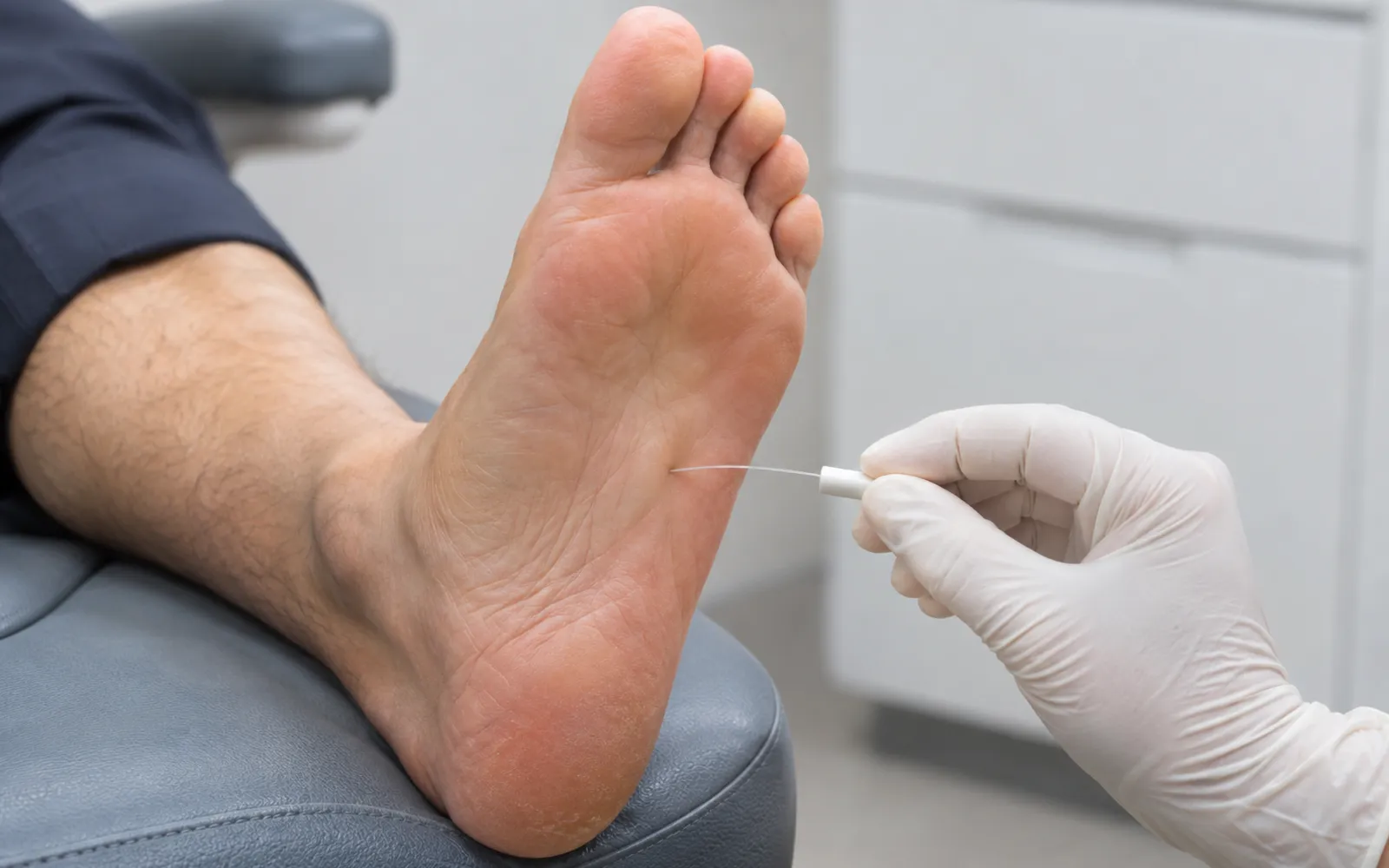
A full symptom history
Readers in Greenwood Village can prepare by listing every symptom with its start date, plus anything else going on with their health. A diagnosis reached by ruling out other causes is only as good as the history behind it. After a diagnosis, the question moves to what can be done, and the pages on what causes diabetes-related neuropathy and whether it can be reversed take that up.
A symptom that does not fit
A new symptom that does not fit what was already examined is the sign to return. Since the diagnosis rests on no other cause being found, something new may reopen that question, and your clinician is the person to decide.