
How do providers diagnose carpal tunnel syndrome?
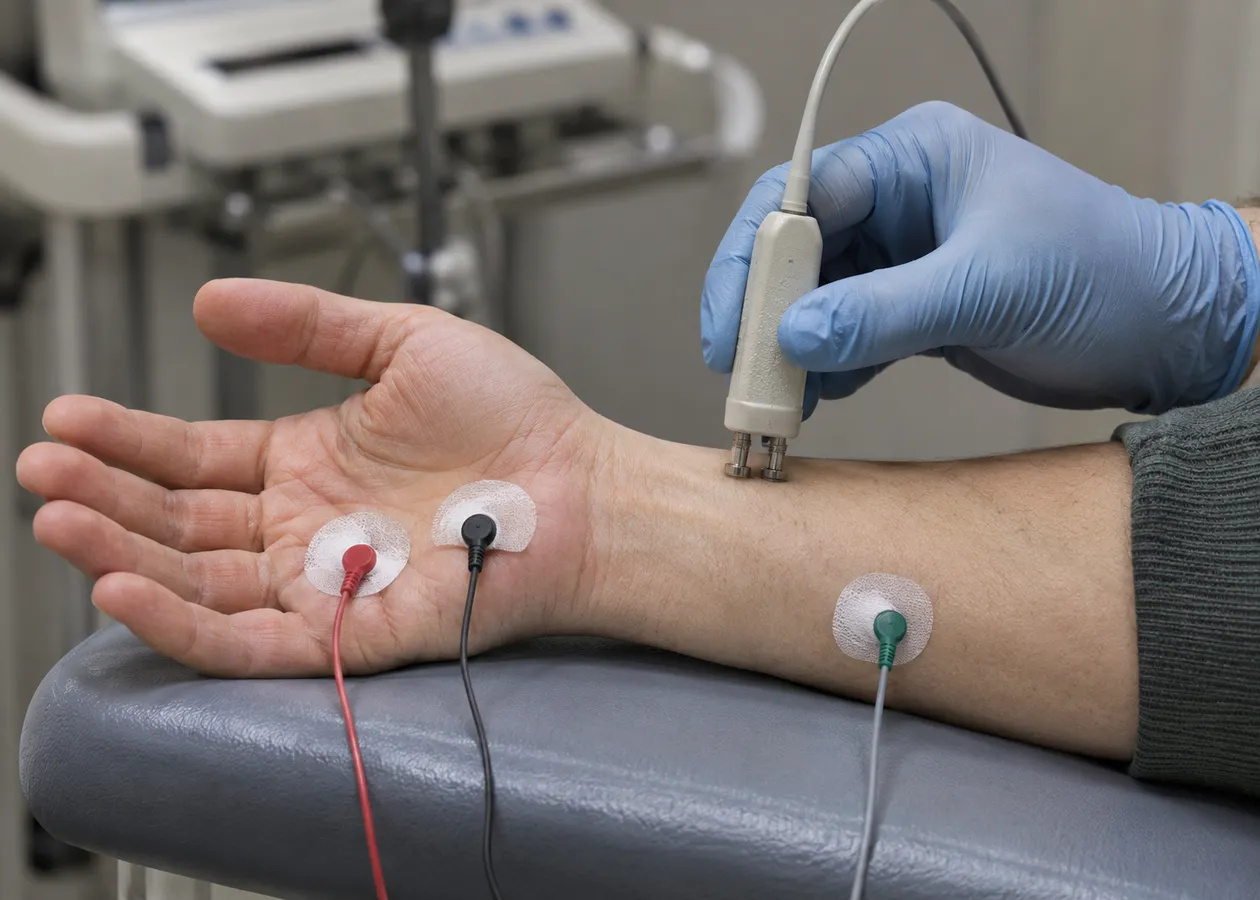
Providers diagnose carpal tunnel syndrome with a physical exam and some tests. An academic medical center's health library describes the process this way: "A healthcare provider will diagnose carpal tunnel syndrome with a physical exam and some tests. They’ll examine your wrist, hand and fingers and ask about your symptoms."
The exam and your own account
Diagnosis is the point where a pattern of symptoms turns into a named condition with a plan. The source places two parts of that visit up front: an examination of your wrist, hand and fingers, and questions about your symptoms. Your own account is part of the evidence, so the more precisely you can describe it, the more the visit has to work with.
If you are reading from Greenwood Village, a short written history helps. Note when the symptoms began, which fingers or which side of the hand they affect, and what you were doing when they showed up. Pages on who is more likely to develop carpal tunnel syndrome and what carpal tunnel syndrome feels like can help you put that history in order.
What to plan for after the diagnosis
A diagnosis opens the question of treatment. The MSD Manual Consumer Version's carpal tunnel syndrome entry is a general reference to read before that conversation. For injection-based options, the same library's nerve block explainer and a PMC systematic review of injectates for ultrasound-guided hydrodissection are written for readers comparing approaches.
Symptoms that shift after the exam
Symptoms that change after your diagnosis are the cue to go back. A different pattern from the one that was examined means the plan may need another look, so report it instead of waiting for the next scheduled visit.